What Not to Say to a Roof Insurance Adjuster: Protect Your Claim
Filing a roof damage claim is stressful. You are dealing with leaks, potential interior damage, and the pressure of getting your home back to normal. When the insurance adjuster shows up to inspect your roof, it feels like the moment that decides everything. And in many ways, it is.
What you say during that visit can strengthen your claim or undermine it. Adjusters are trained professionals whose job is to assess damage accurately, but also to manage the insurance company’s costs. One wrong statement, even an innocent one, can give them a reason to reduce your payout or deny the claim entirely.
This guide covers the specific phrases and mistakes Denver homeowners should avoid when speaking with a roof insurance adjuster, what to say instead, and how to protect your claim from start to finish.
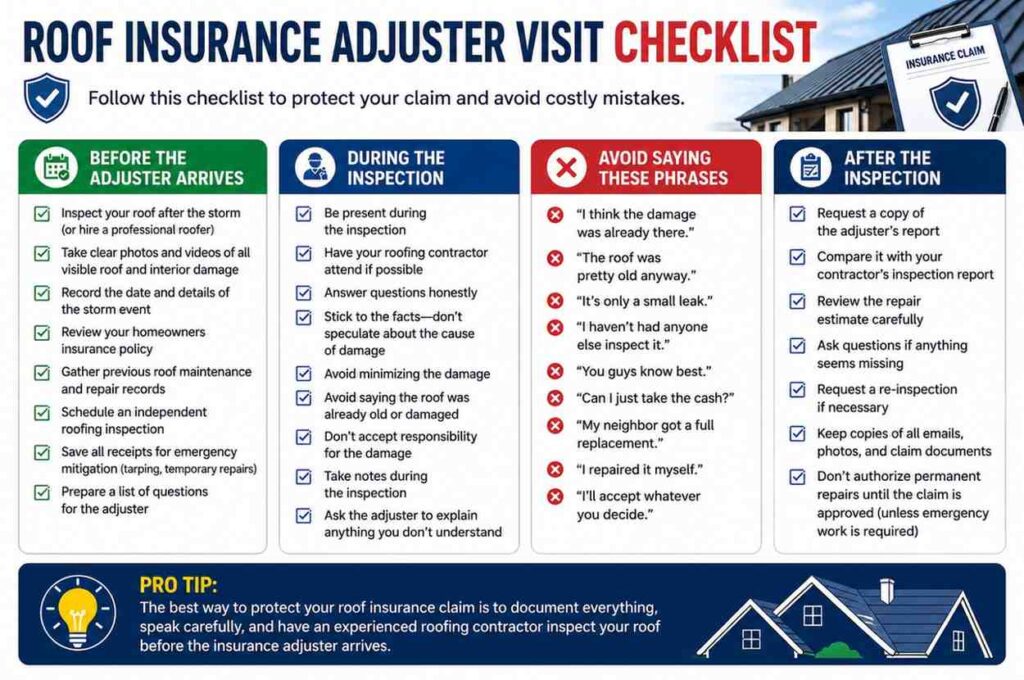
How the Adjuster Visit Works
Before covering what not to say, it helps to understand what the adjuster is doing and why your words matter.
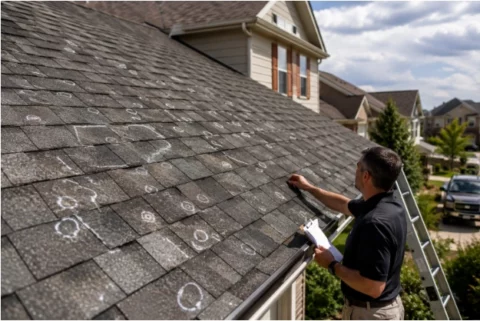
The insurance company sends an adjuster to your property after you file a claim. Their job is to inspect the roof, document the damage, determine the cause, and estimate the cost of repair or replacement. They take photos, measure the roof, and note the type and extent of damage they observe.
The adjuster then writes a report that the insurance company uses to decide whether to approve or deny your claim and how much to pay. Everything you say during the visit can end up in that report. Casual comments, offhand remarks, and even well-intentioned honesty can be interpreted in ways that hurt your claim.
This does not mean you should be dishonest. You should always tell the truth. But there is a difference between being truthful and volunteering information that works against you. Knowing what to avoid saying helps you stay honest while protecting your interests.
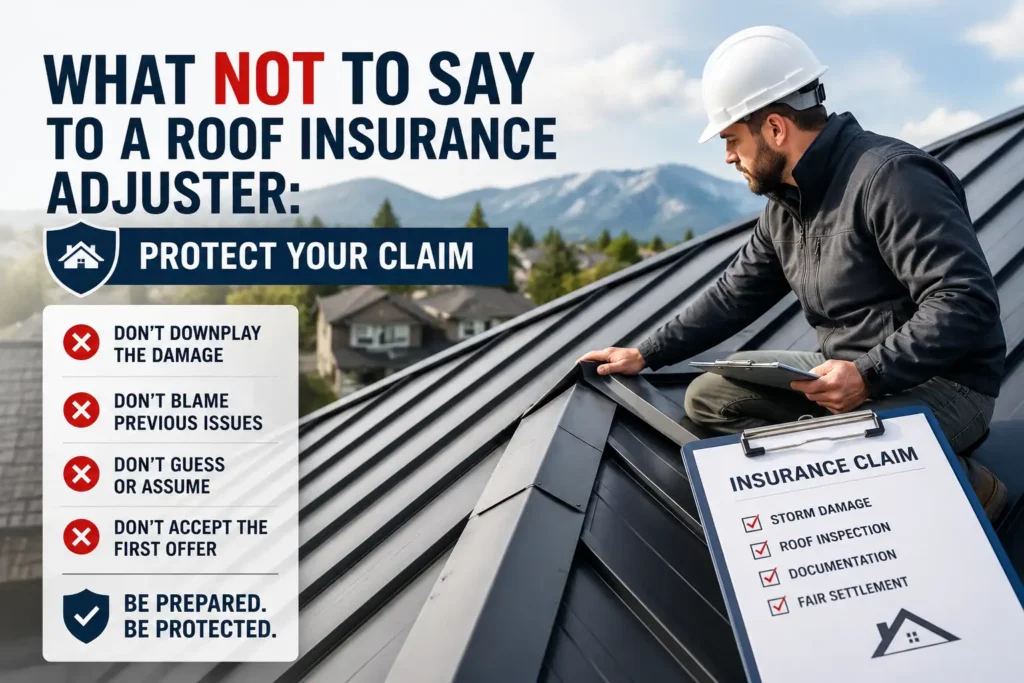
What Not to Say to a Roof Insurance Adjuster
“I Think the Damage Was Already There”
Never suggest that the damage existed before the storm or covered event. Even if you noticed a minor issue previously, saying this gives the adjuster grounds to classify the damage as pre-existing wear and tear rather than storm damage. Pre-existing damage is not covered under most homeowners’ policies.
What to say instead: “I noticed problems after the storm and filed a claim. I would like your professional assessment of the damage.”
Let the adjuster determine the cause and timeline. That is their job. Your job is to report the damage, not diagnose it.
“The Roof Was Pretty Old Anyway”
Mentioning your roof’s age unprompted invites the adjuster to attribute damage to normal aging and depreciation rather than the storm event. Older roofs are already subject to depreciation deductions on many policies. Drawing attention to age gives the adjuster additional justification to reduce the payout or argue that the roof was at the end of its life regardless of the storm.
What to say instead: If asked directly about the roof’s age, answer honestly. But do not volunteer this information or editorialize about the roof’s condition before the storm.
“It Is Just a Small Leak, Nothing Major”
Downplaying the damage is one of the most common mistakes homeowners make. You might think you are being reasonable or honest, but minimizing the problem signals to the adjuster that the damage is minor and may not warrant a significant payout.
Roof damage is often far more extensive than what you can see from inside the home. A small ceiling stain might indicate widespread membrane damage, saturated insulation, or compromised decking that is not visible without a full inspection. Let the adjuster assess the full scope without your commentary setting a low baseline.
What to say instead: “There is visible damage that I am concerned about. I want to make sure everything is thoroughly inspected.”
“I Have Not Had Anyone Else Look at It”
Getting an independent inspection from a qualified roofing contractor before the adjuster visit is one of the smartest moves you can make. Telling the adjuster that no one else has inspected the roof means you have no independent documentation to support your claim or challenge the adjuster’s findings if they undervalue the damage.
What to say instead: “I have had a professional roofing contractor inspect the damage and document their findings.” Having a contractor’s report gives you leverage and ensures the adjuster knows their assessment will be compared against independent documentation.
“I Guess You Guys Know Best”
Deferring entirely to the adjuster’s judgment without question is a mistake. Adjusters are knowledgeable, but they work for the insurance company. Their assessment may not capture every issue, and their estimate may not reflect the full cost of proper repairs in the Denver market.
What to say instead: “I appreciate your assessment. I would like to review the report and compare it with my contractor’s estimate before accepting.”
You have the right to review, question, and dispute the adjuster’s findings. Exercising that right is not confrontational. It is responsible.
“Can You Just Give Me Cash Instead of Fixing It?”
Asking for a cash payout instead of repairs raises red flags. It can signal to the adjuster that you are trying to profit from the claim rather than restore your property. It may also trigger additional scrutiny or documentation requirements.
What to say instead: Focus the conversation on getting the damage properly repaired. If you have questions about how the payout works, ask your insurance agent separately rather than discussing it with the adjuster on-site.
“My Neighbor Got a Full Replacement”
Every claim is evaluated independently based on the specific damage to your specific roof. Comparing your situation to a neighbor’s claim is irrelevant to the adjuster and can come across as trying to pressure them into a larger payout. It does not help your case and may make the adjuster less receptive.
What to say instead: Keep the conversation focused entirely on the damage to your property. Your neighbor’s roof, policy, and damage are separate matters.
“I Did Some Repairs Myself”
Mentioning DIY repairs signals two problems. First, it suggests you may have altered or obscured the original storm damage, making it harder to assess. Second, amateur repairs can void warranty coverage and may not meet building code requirements. The adjuster may use this information to reduce the scope of covered damage.
What to say instead: If you made emergency temporary repairs to prevent further damage (like tarping a leak), explain that you took steps to mitigate additional damage, which is actually required by most policies. But avoid discussing any permanent repair attempts you made on your own.
“I Will Accept Whatever You Decide”
Telling the adjuster you will accept their decision without review removes any incentive for them to be thorough or generous in their assessment. You are entitled to review the adjuster’s report, get a second opinion, and negotiate if the estimate does not cover the full cost of proper repairs.
What to say instead: “I want to review the full report and discuss it with my contractor before we finalize anything.”
What You Should Do Before the Adjuster Arrives
Preparation makes a significant difference in how your claim is handled.
Get an Independent Roof Inspection First
Have a qualified roofing contractor inspect your roof and document the damage before the adjuster visits. A professional inspection report with photos, measurements, and a detailed damage assessment gives you an independent record to compare against the adjuster’s findings. If there are discrepancies, you have documentation to support a dispute.
At 303 Roofer, we provide thorough pre-adjuster inspections for Denver homeowners. We document every issue so you have a complete picture of the damage before the insurance company makes its assessment.
Document Everything Yourself
Take photos and videos of all visible damage, both on the roof (if you can safely access it) and inside the home. Photograph water stains, damaged ceilings, wet insulation, and any debris from the storm. Date-stamped photos create a timeline that supports your claim.
Review Your Policy
Read your homeowners insurance policy before the adjuster arrives. Understand your deductible, what types of damage are covered, whether you have replacement cost or actual cash value coverage, and any exclusions that apply. Going into the meeting informed helps you ask better questions and recognize if something is being unfairly excluded.
Be Present During the Inspection
Always be home when the adjuster inspects your roof. If possible, have your roofing contractor present as well. Your contractor can point out damage the adjuster might miss and ensure the full scope of the problem is documented. Having a knowledgeable advocate on-site changes the dynamic of the inspection significantly.
What to Do If Your Claim Is Undervalued
If the adjuster’s estimate does not cover the full cost of proper repairs, you have several options.
Request a re-inspection. You can ask the insurance company to send a different adjuster for a second look. Provide your contractor’s estimate and inspection report as supporting documentation for why you believe the original assessment was too low.
File a supplement. If additional damage is discovered during repairs that was not in the original estimate, your contractor can file a supplement with the insurance company requesting additional funds to cover the full scope of work.
Hire a public adjuster. A public adjuster works for you, not the insurance company. They conduct their own inspection and negotiate directly with the insurer on your behalf. Public adjusters typically charge a percentage of the claim payout.
Contact your state insurance department. If you believe your claim has been unfairly denied or undervalued, you can file a complaint with the Colorado Division of Insurance.
Denver-Specific Considerations
Denver’s climate creates unique insurance claim dynamics. The city averages 7 to 10 damaging hail storms per year, making roof damage claims extremely common. Insurance companies operating in Colorado are experienced at handling hail claims, and their adjusters know the local market well.
Several factors specific to Denver affect how claims are processed.
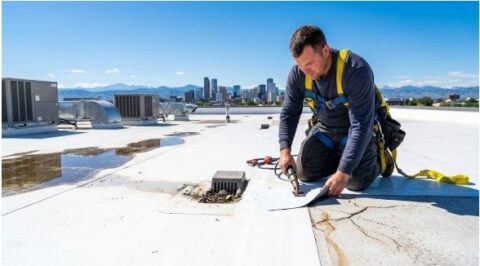
Hail damage on flat roofs can be harder to identify than on sloped shingle roofs. Membrane punctures, bruising, and seam damage from hail may not be immediately visible without a trained eye. Having a contractor experienced with flat-roof hail damage ensures nothing is missed.
Denver’s Green Buildings Ordinance may require upgrades when repairing or replacing a roof, depending on the scope of work. These code-required upgrades should be covered by your insurance policy under ordinance or law coverage. Make sure your adjuster accounts for any mandatory upgrades.
Colorado law gives homeowners the right to choose their own contractor. The insurance company cannot require you to use a specific company or preferred vendor list. You are free to hire the contractor you trust.
Need help navigating your roof insurance claim? Contact 303 Roofer for a free pre-adjuster inspection and expert guidance through the claims process.
Frequently Asked Questions
Should I file a claim before or after getting a roofing estimate?
Get a professional roof inspection first. Having a contractor’s documented assessment before filing gives you a clearer picture of the damage and strengthens your claim from the start. Your contractor can also advise whether the damage is likely to meet your deductible threshold, helping you decide whether filing is worthwhile.
Can I be present when the adjuster inspects my roof?
Yes, and you should be. Being present allows you to point out damage, ask questions, and ensure nothing is overlooked. Having your roofing contractor present as well provides expert support during the inspection.
What if the adjuster misses damage?
You can request a re-inspection or file a supplement. Provide your contractor’s documentation showing the additional damage. If the insurance company refuses to revisit, you can escalate through a public adjuster or the Colorado Division of Insurance.
How long do I have to file a roof damage claim in Colorado?
Most Colorado homeowners policies require you to report damage promptly, typically within 60 days of the event. However, specific timelines vary by policy. File as soon as possible after discovering storm damage to avoid any deadline issues.
Protect Your Claim From the Start
What you say to the roof insurance adjuster matters more than most homeowners realize. Being prepared, having independent documentation, and knowing what to avoid saying puts you in the strongest possible position.
At 303 Roofer, we help Denver homeowners navigate the insurance claim process every day. From pre-adjuster inspections to claim documentation and repair execution, we are with you at every step.
Contact 303 Roofer today for a free roof inspection and claims consultation.

Related Blog Articles