5 Reasons Your Roof Replacement Claim May Be Denied
You filed your roof damage claim expecting the insurance company to cover the replacement. The adjuster came out, inspected the roof, and submitted their report. Then you got the letter: claim denied.
It happens more often than most Denver homeowners realize. Insurance companies deny roof replacement claims for specific, documented reasons, and many of those reasons are preventable if you know what to watch for. Understanding why claims get denied helps you avoid the most common pitfalls and puts you in a stronger position to get the coverage you are paying for.
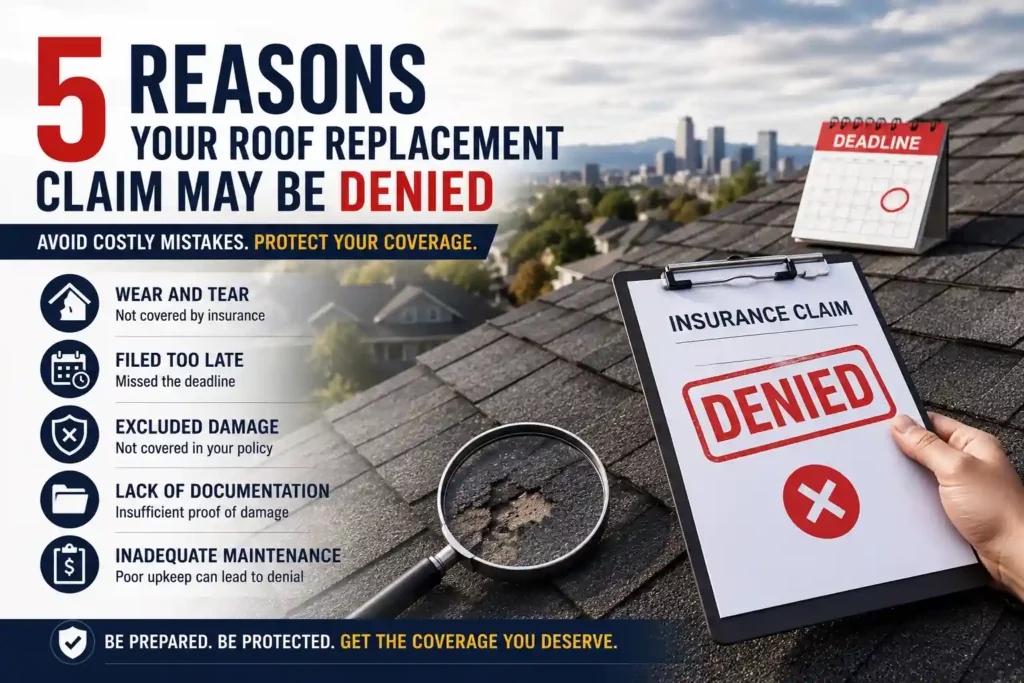
Here are the five most common reasons roof replacement claims are denied in Colorado, and what you can do about each one.
Reason 1: The Damage Is Classified as Wear and Tear
This is the most frequent reason insurance companies deny roof replacement claims. Homeowners insurance covers sudden, accidental damage from specific events like hail, wind, falling trees, and fire. It does not cover gradual deterioration from aging, weathering, or lack of maintenance.
If the adjuster determines that the damage to your roof is the result of normal wear and tear rather than a covered event, the claim will be denied. This happens even when a storm may have caused some damage, if the adjuster concludes that most of the problems are from long-term aging.
In Denver, this distinction matters because the climate is hard on roofs year-round. UV exposure at altitude, freeze-thaw cycling, and years of minor hail impacts all contribute to gradual wear. An adjuster may look at a 15 or 20 year old roof and attribute the damage to age rather than the specific storm you reported.
How to Protect Yourself
Keep records of roof maintenance, inspections, and any repairs performed over the years. Documentation showing that you maintained the roof properly makes it harder for the insurer to argue that neglect caused the deterioration. Get a professional inspection after every major storm and keep the reports on file. Having a contractor’s assessment linking specific damage to a specific weather event strengthens your position significantly.
Reason 2: The Claim Was Filed Too Late
Most homeowners insurance policies in Colorado include a requirement to report damage within a specific timeframe after the event, typically 60 days, though this varies by policy. If you miss this window, the insurance company can deny the claim regardless of how severe the damage is.
Late filing is more common than you might think. Some homeowners do not realize they have roof damage until weeks or months after a storm, especially with flat roofs where leaks may not appear immediately. Others put off filing because the damage seems minor, only to discover later that it is much worse than expected. By then, the filing deadline may have passed.
How to Protect Yourself
Inspect your roof after every significant storm, or hire a professional to do it. Denver averages 7 to 10 damaging hail storms per year, so this should be a regular habit. If damage is found, file your claim immediately. Do not wait to get a contractor estimate first. You can file the claim and then provide supporting documentation afterward. The clock starts when the damage occurs, not when you discover it, so acting quickly is essential.
Reason 3: Your Policy Excludes the Type of Damage
Not all roof damage is covered by every policy. Some homeowners are surprised to learn that their specific policy excludes certain types of damage or has limitations they were not aware of.
Common exclusions and limitations that affect Denver homeowners include cosmetic damage exclusions, which deny coverage for hail damage that affects the appearance of the roof but does not compromise its function. Some policies also exclude damage from ice dams, which can affect flat roofs during Denver winters. Older roofs may be covered under actual cash value (ACV) rather than replacement cost value (RCV), meaning the payout is reduced by depreciation based on the roof’s age and condition.
Flood damage is another common exclusion. Standard homeowners policies do not cover flooding, which requires a separate flood insurance policy. If water damage resulted from flooding rather than a roof failure, the claim will be denied under your standard policy.
How to Protect Yourself
Read your policy before you need it. Understand your coverage type (RCV vs. ACV), your deductible, and any exclusions or endorsements. If you have a cosmetic damage exclusion, consider whether upgrading your policy is worthwhile given Denver’s frequent hail. Ask your insurance agent to walk through your roof coverage specifically so there are no surprises when you file a claim.
Reason 4: Lack of Documentation
Insurance companies require documentation to process claims. Without adequate evidence showing the damage, its cause, and its extent, the insurer may deny the claim or pay significantly less than the actual repair cost.
Documentation failures take several forms. Some homeowners file a claim without any photos of the damage. Others cannot provide evidence connecting the damage to a specific weather event. Some have no record of previous roof condition, making it impossible to demonstrate that the damage is new rather than pre-existing.
In Denver, where hail storms are frequent and cumulative damage is common, documentation is especially important. Multiple storms in a single season can make it difficult to attribute specific damage to a specific event without clear records.
How to Protect Yourself
Document your roof’s condition before damage occurs. Take photos of your roof annually and after major storms, even when no damage is visible. This creates a baseline record showing the roof’s pre-damage condition.
When damage does occur, photograph and video everything. Capture the roof surface, any visible damage from ground level, interior water stains, debris from the storm, and damage to other parts of the property. Date-stamped photos are ideal.
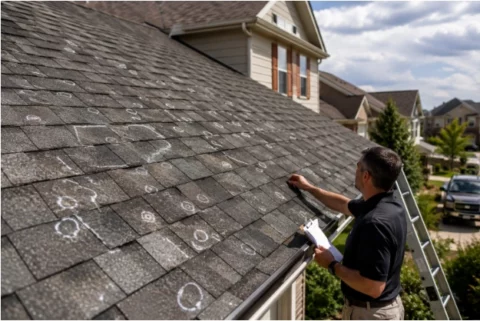
Get a professional roofing inspection with a detailed written report, including photographs, measurements, and a clear assessment of the damage cause. At 303 Roofer, we provide thorough inspection reports designed specifically to support insurance claims. Having professional documentation dramatically improves your chances of a successful claim.
Worried your claim documentation is not strong enough? Contact 303 Roofer for a free professional inspection and detailed damage report.
Reason 5: Improper Repairs or Unauthorized Work
If you made repairs to the roof before the adjuster inspected the damage, the insurance company may deny the claim. Unauthorized repairs can alter or obscure the original damage, making it impossible for the adjuster to accurately assess what the storm caused versus what you changed.
This creates a frustrating situation for homeowners. You have a leaking roof and want to stop the water from coming in, but fixing it before the adjuster sees it can void your claim. The line between emergency mitigation and unauthorized repair is important to understand.
Most policies actually require you to take reasonable steps to prevent further damage. Tarping a hole, placing buckets under leaks, and covering broken areas with plastic sheeting are all considered mitigation. These temporary measures are expected and will not hurt your claim.
What causes problems is making permanent repairs, hiring someone to patch or re-coat the roof, or replacing damaged sections before the adjuster documents them. These actions can be interpreted as altering evidence, even if your intention was simply to protect your home.
How to Protect Yourself
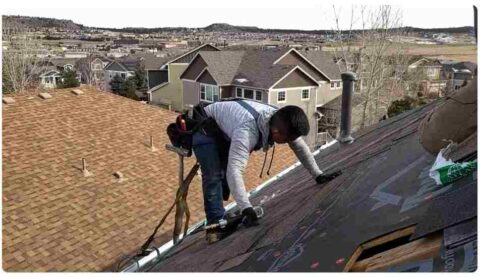
Take temporary mitigation steps to prevent further damage, and document everything you do with photos and receipts. Do not make permanent repairs until after the adjuster has inspected the roof and the claim has been processed. If you must take emergency action beyond basic tarping, photograph the damage thoroughly before touching anything and keep detailed records of what you did and why.
If the adjuster has not visited within a reasonable timeframe and the damage is worsening, contact your insurance company in writing to request an expedited inspection. This creates a record showing you attempted to follow proper procedures.
What to Do If Your Claim Is Denied
A denied claim is not necessarily the final answer. You have several options to challenge the decision.
Review the Denial Letter Carefully
The denial letter should explain the specific reason for the denial. Read it carefully and compare the stated reason against your policy language, your contractor’s inspection report, and any documentation you have. Look for inconsistencies between the adjuster’s findings and what your contractor documented.
Request a Re-Inspection
You can ask the insurance company to send a different adjuster for a second inspection. Provide your contractor’s report, photos, and any additional documentation that supports your claim. A re-inspection with new eyes and better supporting documentation often produces a different result.
File a Supplement
If the original claim was approved but for an amount too low to cover proper repairs, your contractor can file a supplement once additional damage is discovered during the repair process. Supplements are a normal part of the insurance repair process and are commonly approved when properly documented.
Hire a Public Adjuster
A public adjuster works for you, not the insurance company. They conduct their own independent inspection, prepare a detailed estimate, and negotiate directly with the insurer on your behalf. Public adjusters typically charge 10 to 15% of the claim payout. For larger claims where significant money is at stake, this investment often pays for itself.
File a Complaint
If you believe your claim was denied unfairly, you can file a complaint with the Colorado Division of Insurance. The state regulates insurance companies and investigates complaints about unfair claims practices. While this process takes time, it provides an additional avenue for homeowners who have exhausted other options.
Consult an Attorney
For high-value claims or situations where you believe the insurance company is acting in bad faith, consulting an attorney who specializes in insurance claims can be worthwhile. Colorado law provides protections against bad faith insurance practices, and an attorney can advise you on whether legal action is appropriate.
Denver-Specific Claim Challenges
Denver’s climate and insurance market create some unique challenges worth understanding.
Frequent hail creates high claim volume. Denver averages 7 to 10 damaging hail storms per year, making it one of the highest-volume markets in the country for roof damage claims. Insurance companies operating in Colorado have significant experience managing hail claim costs, and some have implemented stricter policies, higher deductibles, or cosmetic damage exclusions specifically for the Denver market.
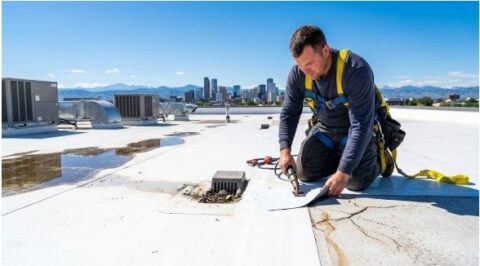
Flat roof damage is harder to prove. Flat and low-slope roofs are common across Denver for both residential and commercial buildings. Hail damage on flat membranes (punctures, bruising, seam compromise) can be subtle and harder to identify than on sloped shingle roofs. Having a contractor experienced with flat roof hail assessment ensures all damage is properly documented.
Code upgrades may be required. Denver’s Green Buildings Ordinance may mandate upgrades when replacing a roof, depending on the scope of work. Your policy’s ordinance or law coverage should pay for code-required upgrades, but you may need to specifically request this coverage be included in the claim.
You have the right to choose your contractor. Colorado law protects your right to hire any licensed contractor for your repairs. The insurance company cannot require you to use their preferred vendor list or a specific company. Choose a contractor you trust who has experience with insurance claim projects.
Frequently Asked Questions
How long does the insurance company have to respond to my claim in Colorado?
Colorado law requires insurance companies to acknowledge receipt of a claim within 15 working days and to approve or deny the claim within a reasonable time after receiving all necessary documentation. If you believe the company is unreasonably delaying your claim, you can file a complaint with the Colorado Division of Insurance.
Can I reopen a denied roof claim?
In some cases, yes. If you have new evidence (a professional inspection report, additional documentation, or a second opinion from a public adjuster) that was not part of the original claim, you can request that the insurer reconsider. The process varies by company, but new evidence can change the outcome.
Should I accept the first offer from the insurance company?
Not necessarily. The first offer is based on the adjuster’s initial assessment, which may not capture the full scope of damage or the actual cost of proper repairs in the Denver market. Review the offer against your contractor’s estimate and negotiate if there is a significant gap.
Does filing a roof claim raise my insurance premiums?
It can. Some insurers increase premiums after a claim, particularly in high-risk markets like Denver. However, not filing a legitimate claim to avoid a rate increase can leave you paying out of pocket for damage that should be covered. Discuss the potential premium impact with your insurance agent before deciding.
Do Not Let a Denied Claim Be the Final Answer
Understanding why roof replacement claims get denied is the first step toward preventing a denial or overturning one. Maintain your roof, document its condition, file promptly, know your policy, and avoid making repairs before the adjuster visits.
At 303 Roofer, we help Denver homeowners navigate every stage of the roof insurance claim process. From professional inspections and claim documentation to supplement filing and repair execution, we have the experience to help you get the coverage you deserve.
Contact 303 Roofer today for a free roof inspection and insurance claim consultation.

Related Blog Articles