Hail Damage Roof Repair in Denver: Complete 2026 Homeowner’s Guide
If a hailstorm just hit your neighborhood, the fastest path forward is a free professional roof inspection within 24-48 hours, followed by photo documentation and an insurance claim filed before you make any repairs. Denver sits in “Hail Alley,” and homeowners who wait risk hidden leaks, denied claims, and higher out-of-pocket costs.
This guide walks through how to identify hail damage, what repair or replacement actually costs in the Denver metro, how the insurance claim process works, and where to get help fast if you’re in Denver, Aurora, Lakewood, or Highlands Ranch.
How Common Is Hail Damage to Roofs in Denver?
Hail damage to roofs is extremely common in Denver because the metro area sits in one of the most hail-prone corridors in the United States. The Denver area (within roughly a 15-mile radius) has recorded 3,310 hail events since 2015, averaging about 301 hailstorms per year, according to NOAA NEXRAD radar data.
Most of these hailstones are small – roughly 56% fall between 1 and 2 inches, and 36% are under 1 inch – but about 7% exceed 2 inches, with the largest recorded stone near Denver reaching 4 inches in diameter. Even hail under an inch can bruise shingles and crack seals, while anything over 1.5 inches typically causes visible, claimable damage.
Denver consistently ranks among the top five most hail-impacted cities in the U.S. each year. Storm activity peaks between April and August, with the sharpest spikes in May, June, and July. If your roof has gone through even one full Colorado summer, there’s a real chance it has sustained some level of hail impact already.
Denver’s Costliest Hailstorms
Colorado’s Front Range – heavily centered on Denver – has driven more than $5 billion in insured hail damage over the past decade. A few storms account for a large share of that total:
- May 8, 2017: Colorado’s costliest hailstorm on record, with roughly $2.3 billion in insured losses and hundreds of thousands of claims filed.
- July 20, 2009: Approximately $768 million in insured losses.
- July 11, 1990: Approximately $625 million in insured losses.
Because of this exposure, hail-related claims frequently make up 26% to 54% of homeowners insurance premiums along the Front Range, often closer to 50% in higher-risk areas. Insurance companies price Denver roofing risk aggressively – which is exactly why documenting damage correctly matters so much when you file a claim.
How to Tell If Your Roof Has Hail Damage
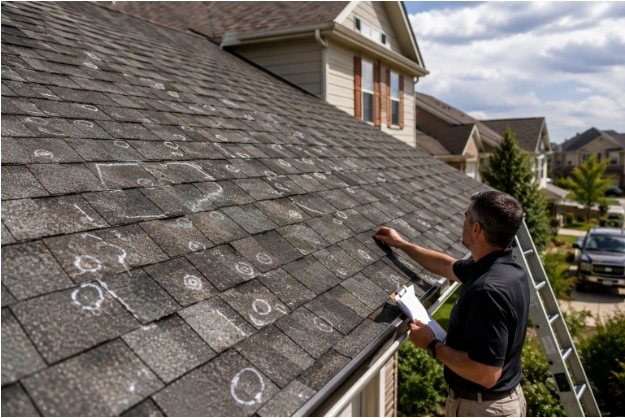
The clearest signs of hail damage are circular bruising on shingles, granule loss that exposes the black mat underneath, cracked or split shingles, and dented soft metal like vents, flashing, and gutters. Some of these signs are visible from the ground; most require a trained eye on the roof itself.
Look for:
- Soft, dark bruises on asphalt shingles, often the size of the hailstone that caused them
- Granule loss, visible as bald or shiny patches, or granules collecting in gutters and downspouts
- Cracked, split, or torn shingles, especially on older three-tab roofing
- Dents in gutters, downspouts, vents, and flashing — often the easiest hail evidence to spot from the ground
- Damaged window screens, siding, or a dented A/C unit, which usually means the roof took hits too
- Granules or debris in downspout runoff after a storm
A roof can look fine from the driveway and still have significant hail bruising. Because impact damage isn’t always visible immediately, a professional roof inspection after any hailstorm with quarter-sized hail or larger is the safest way to confirm whether repair is needed before small cracks turn into leaks.
Repair or Replace? What the Damage Actually Determines
Whether hail damage calls for repair or full replacement depends on how widespread the impacts are, not just how severe a single hit looks. Isolated bruising across a small area is usually repairable. Damage spread across most of the roof’s slopes, combined with granule loss or cracked mats, typically pushes an adjuster toward a full replacement recommendation.
Roofing material also plays a role. Asphalt shingles bruise and crack more easily than impact-resistant Class 4 shingles or metal roofing, which can dent under hail but rarely fail structurally from a single storm. Roof age matters too – a roof already near the end of its expected lifespan is far more likely to be recommended for full replacement after a significant hailstorm than a roof installed within the last five years.
Hail Damage Roof Repair Cost in Denver
Hail damage roof repair in Denver typically costs a few hundred to a few thousand dollars for isolated damage, while a full hail-related roof replacement generally runs $8,000 to $25,000 or more, depending on roof size, pitch, and material.
| Scope of Work | Typical Denver Cost Range | When It Applies |
| Minor spot repair (few shingles, flashing) | $300 – $1,500 | Isolated bruising or a small number of cracked shingles |
| Moderate repair (larger section, gutters, vents) | $1,500 – $5,000 | Damage concentrated on one or two slopes |
| Full roof replacement | $8,000 – $25,000+ | Widespread granule loss, cracked mats, or damage across most slopes |
| Insurance deductible (out-of-pocket portion) | $1,000 – $2,500 flat, or 1-2% of dwelling coverage | Set by your policy, not by the roofer |
For broader context, industry data shows U.S. hail-related home insurance claims average roughly $11,000 to $17,000 overall, and Colorado ranks among the highest states nationally for hail-related property damage costs per capita. Your final number depends heavily on your specific policy type – Replacement Cost Value (RCV) policies pay the full replacement cost minus your deductible, while Actual Cash Value (ACV) policies subtract depreciation first, which usually means a larger out-of-pocket cost for older roofs.
How to File an Insurance Claim for Hail Damage in Denver
Filing a hail damage roof claim in Denver starts with documentation, not a phone call to your insurer. Follow these steps in order:
- Photograph the damage first. Take dated photos of shingles, gutters, vents, siding, and any dented outdoor fixtures before anything is touched or repaired.
- Get a professional roof inspection. A licensed Denver roofer can identify hail bruising, granule loss, and cracked shingles that aren’t visible from the ground, and provide a written estimate.
- File your claim with your insurance company. Report the storm date and provide your photos and the roofer’s inspection findings.
- Meet the adjuster at your home. Having your roofer present during the adjuster’s visit helps ensure the assessment reflects the actual scope of damage, not just what’s visible from a quick walk-around.
- Review the settlement and deductible. Confirm whether your policy is RCV or ACV, and what portion you owe before repairs begin.
- Schedule repair or replacement. Under Colorado law (C.R.S. § 6-22-101), it is illegal for a roofer to pay, waive, or absorb your deductible – be cautious of any contractor who offers to do so.
Because Denver hail claims spike sharply within 24 hours of a major storm and stay elevated for weeks while claims are processed, getting your roof inspected and documented early – before the surge of claims slows down adjusters – puts you in a stronger position.
Hail Damage Roof Repair in Aurora, Lakewood & Highlands Ranch
Hail damage isn’t limited to Denver proper – the entire metro area sits inside the same hail corridor, and repair needs look similar across surrounding cities.
Aurora hail damage roof repair requests often follow the same storm tracks that move through east Denver, since many of the region’s largest hailstorms travel along the Front Range corridor. Homes in Aurora frequently see the same granule loss and shingle bruising patterns as central Denver after a shared storm event.
Lakewood hail damage roof repair needs tend to follow storms moving off the foothills, which can intensify quickly as they reach the western metro. Older roofs in established Lakewood neighborhoods are especially prone to cracking after repeated hail seasons.
Highlands Ranch hail roof repair demand often rises after summer storms that sweep through the southern metro, where larger lot sizes and steeper roof pitches can mean more exposed roofing surface area taking direct impact.
Wherever you’re located across the Denver metro, the inspection and claims process works the same way – the priority is documenting damage quickly after the storm passes.
Hail-Resistant Roofing: Is It Worth the Upgrade?
Impact-resistant roofing is worth the upgrade for most Denver homeowners because it reduces both storm damage and long-term insurance costs in a region that averages roughly 300 hail events a year. Class 4 impact-resistant shingles and metal roofing systems are built to absorb hail impact without cracking or losing granules the way standard three-tab shingles do.
Many insurers offer premium discounts for Class 4 roofing, since it lowers the insurer’s own claim risk in hail-prone areas – a discount worth asking about directly when you’re comparing repair versus full replacement after storm damage. For homeowners replacing a roof after a significant hailstorm anyway, upgrading to impact-resistant materials at that point is often the most cost-effective time to make the switch.
Why Timing Matters: Before the Next Storm Hits
Roofing search demand and lead volume can roughly triple during peak storm season compared to average months, and rankings built before a storm season starts are what determine which companies homeowners find first when a major hailstorm hits. After a big storm, competition intensifies fast – from local companies and traveling “storm chaser” crews alike – which is exactly when having an established, trusted local roofer already on your radar pays off.
Scheduling a roof inspection before hail season (ideally in early spring) gives you a documented baseline condition report. If a storm does cause damage later, that baseline makes your insurance claim faster and harder to dispute.
Why Homeowners Across Denver Trust 303Roofer for Hail Damage
At 303Roofer, hail damage repair and insurance claim support is one of the most common calls we handle every storm season. Our team inspects roofs across Denver, Aurora, Lakewood, Highlands Ranch, and the surrounding metro, documents damage the way adjusters expect to see it, and works alongside homeowners through the entire claims process – not just the repair itself.
We handle both residential Roofing and commercial roofing, from minor spot repairs after a light hailstorm to full replacements after major events like the storms that have hit the Front Range in recent years.
FAQ’s About Hail Damage Roof Repair in Denver
Q1. How do I know if my roof has hail damage if I can’t see anything from the ground?
Ans: Ground-level views often miss hail bruising, cracked mats, and granule loss, which are only visible up close. A professional roof inspection after any hailstorm with quarter-sized hail or larger is the most reliable way to confirm damage.
Q2. How much does hail damage roof repair cost in Denver?
Ans: Minor spot repairs typically run $300 to $1,500, while full roof replacements driven by widespread hail damage generally cost $8,000 to $25,000 or more, depending on roof size and material.
Q3. Can a roofer waive or pay my insurance deductible?
Ans: No. Under Colorado law (C.R.S. § 6-22-101), it is illegal for a roofer to pay, rebate, or absorb a homeowner’s deductible in any way. Be cautious of any contractor who offers this.
Q4. How quickly should I get an emergency hail roof repair after a storm?
Ans: If you notice active leaks, exposed decking, or missing shingles, emergency tarping and repair should happen within 24-48 hours to prevent water intrusion and further interior damage.
Q5. Does wind damage get covered along with hail damage on the same claim?
Ans: Often yes. Denver storms frequently combine high winds with hail, and most homeowners policies cover wind and hail damage under the same windstorm/hail claim, though your adjuster will assess each separately.
Q6. Is it worth upgrading to hail-resistant roofing after a claim?
Ans: For most Front Range homeowners, yes. Class 4 impact-resistant shingles hold up better in future storms and often qualify for insurance premium discounts, making a post-storm replacement a practical time to upgrade.
Get a Free Hail Damage Roof Inspection in Denver
If your roof has been through a recent hailstorm, don’t wait for a small crack to become a bigger leak. Request a free roof inspection or get a free estimate from 303Roofer, and our team will document the damage, walk you through your insurance claim, and get your roof back to full strength.
Chris Kane: There are many factors to consider when conducting extensive repair work or replacement to your roof. One of the most important decisions is selecting a Denver roofing contractor you can trust to get the job done right. When you work with 303 Roofer, you can expect complete professionalism from start to finish.

Related Blog Articles