How Class 4 Impact-Resistant Shingles Can Cut Your Denver Home Insurance by Up to 28%
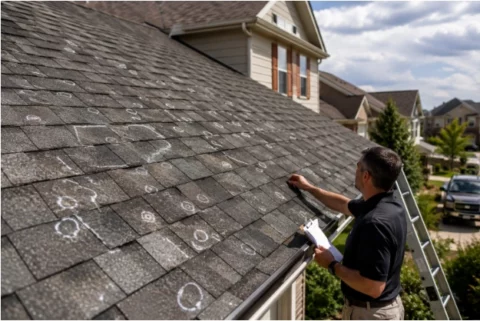
If you’ve owned a home in the Denver metro area for more than a few summers, you already know how damaging hail can be. One major storm can leave your roof compromised—and your neighborhood flooded with roofing contractors the next day.
Many homeowners ask the same question: “Is there a roof that can actually handle Colorado hail?”
While no roof is completely hail-proof, Class 4 impact-resistant shingles come close. Even better, they can unlock insurance discounts of 15% to 30%, making them one of the smartest upgrades for Denver homeowners.
In this guide, we’ll break down what Class 4 shingles are, why they matter in Colorado, and whether they’re worth the investment.
What Exactly Is a Class 4 Shingle?
The “Class 4” label isn’t marketing. It’s a UL 2218 rating, the highest impact resistance score a shingle can earn. To qualify, the shingle has to survive a 2-inch steel ball dropped from 20 feet without cracking, splitting, or shedding granules. Classes 1 through 3 shingles fail that test at smaller hail sizes. Class 4 holds up.
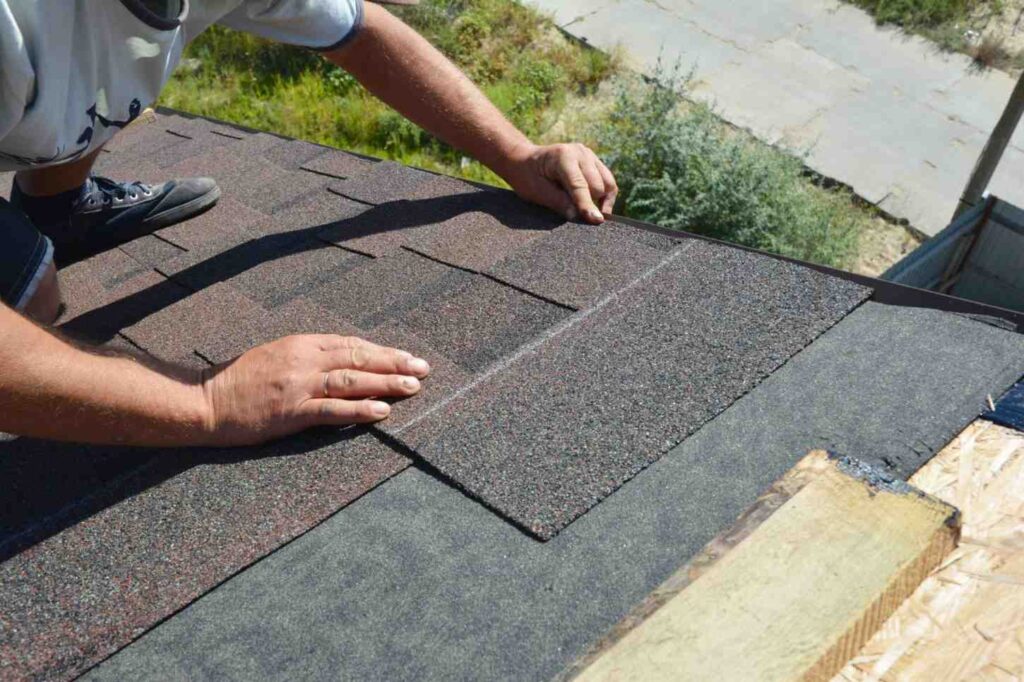
Most Class 4 shingles get their toughness from SBS-modified asphalt, which is essentially asphalt blended with rubber polymers. That rubber gives the shingle the flex it needs to absorb a hailstone instead of cracking on contact. A few brands use a polymer scrim on the back of the shingle instead, which is functional but generally not as durable in real-world Colorado conditions. When you’re shopping, ask which method the shingle uses. There’s a real difference.
Why Colorado Homeowners Specifically Need This
Denver sits in what insurers call “Hail Alley,” one of the most hail-prone regions in the U.S.
Homeowners here face:
- 3–4 major hailstorms per year
- Frequent minor hail damage
- Shortened roof lifespans
The result? Standard Class 3 shingles in Denver often need replacement in 12 to 15 years, sometimes sooner, even though they’re rated for 25 to 30. Class 4 shingles, properly installed, will frequently make it to their full warranted lifespan because they’re not being chewed up storm by storm.
A few Colorado counties have already taken notice. Larimer County, for example, requires Class 4 shingles on certain roof replacements, and we expect more municipalities along the Front Range to follow.
The Insurance Discount Most Homeowners Don’t Ask About
This is where Class 4 stops being just a roofing decision and starts being a financial one. Major insurers writing policies in Colorado, including State Farm, Farmers, Allstate, USAA, and American Family, all offer discounts for verified Class 4 roof installations. The actual discount varies by carrier and ZIP code, but here is what we typically see:
- Farmers: up to 27% off the dwelling portion
- State Farm: 10% to 35% in hail-prone counties
- Safeco: 10% to 15%
- USAA: 5% to 20%
- American Family: rate reductions for impact-resistant roofs
If your annual premium is $2,000 and you qualify for a 25% discount, that’s $500 a year back in your pocket, every year, for the life of the roof. On a 30-year roof, that’s $15,000 in compounded savings before you account for the fact that you’re filing fewer claims and avoiding deductibles.
The catch: you have to ask. Insurers don’t volunteer the discount. You’ll need to provide the manufacturer’s UL 2218 Class 4 certification document, which a legitimate roofing contractor will give you at the end of the job.
The Real Cost Without the Sticker Shock
Class 4 shingles run about 10% to 20% more than a standard architectural shingle. On an average 2,500-square-foot Denver home, that translates to roughly $1,000 to $2,500 in upgraded material costs. Compared to the lifetime insurance savings, plus the cost of replacing a Class 3 roof every 12 years instead of 25, the math works out heavily in favor of the upgrade.
You also need to factor in deductibles. A typical wind/hail deductible in Colorado is 1% to 2% of your home’s insured value. If your home is insured for $600,000, that’s a $6,000 to $12,000 out-of-pocket cost every time you file a claim. Class 4 shingles dramatically reduce how often that scenario plays out.
Which Brands Actually Hold Up Here
We work with all the major manufacturers, but for Colorado specifically, we tend to see the best real-world results from:
- Owens Corning Duration FLEX
- GAF Timberline AS II
- CertainTeed Landmark IR
- Malarkey Vista AR
All four are true UL 2218 Class 4 products with SBS-modified asphalt. They also come with extended manufacturer warranties, typically 50 years compared to 30 on standard shingles.
What to Watch Out For
A few things to verify before you sign anything:
The contractor should be able to hand you the manufacturer’s certification, not a printout, the actual product documentation that goes with your serial-numbered shipment. Without it, your insurer won’t honor the discount.
Some contractors quote a Class 4 price but install a Class 3 shingle and rely on you not checking. This happens more than it should. Your invoice should list the specific product name and class.
Before hiring a roofer, watch out for these common issues:
- Missing certification:
Your contractor must provide official manufacturer documentation - Wrong product installed:
Some contractors quote Class 4 but install Class 3 - Storm-chasing companies:
These often lack warranty support and disappear after jobs
Always verify:
- Product name on invoice
- UL 2218 certification
- Local contractor reputation
Is the Upgrade Worth It for Your Home?
If you’re already replacing your roof, almost always yes. The price gap is small enough, and the insurance savings plus reduced claim frequency mean most homeowners break even within three to seven years. After that, you’re saving money every month.
If your current roof is fine and you’re considering a proactive replacement just to get Class 4? Run the numbers based on your premium, your insurer’s specific discount, and the age of your existing roof. We’re happy to walk through that calculation with you.
Get a Straight Answer for Your Home
303 Roofer has been installing Class 4 systems across the Denver metro for years, and we’ll tell you honestly whether the upgrade pencils out for your specific home and insurance carrier. We handle-
- The certification paperwork
- Work directly with your adjuster if a claim comes up
- Stand behind the install with a workmanship warranty.
Ready to find out what your roof should actually look like? Call us at (303) 390-1382 or schedule a free roof inspection. We’ll show you exactly what’s up there now and what your options look like.
FAQ’s
Q1. Will I automatically get the insurance discount when I install Class 4 shingles?
Ans: No. You have to notify your insurer and provide the manufacturer’s UL 2218 certification. Most carriers also require a copy of the installation invoice. Your roofing contractor should provide both.
Q2. Are Class 4 shingles really hail-proof?
Ans: No roof is truly hail-proof, especially against the larger hail (3+ inches) Denver occasionally sees. But Class 4 shingles dramatically outperform standard shingles in typical Colorado storms and reduce the frequency of full replacements.
Q3. How can I tell if my current roof has Class 4 shingles?
Ans: Check the original installation paperwork or look at the back of a sample shingle in your attic. Class 4 products will have the UL 2218 designation printed on the wrapper. If you don’t have records, a roofing inspector can identify the product visually.
Q4. Do Class 4 shingles look different than standard shingles?
Ans: Not significantly. Most Class 4 products are designed to match the appearance of standard architectural shingles, so curb appeal stays the same.
Q5. Will I lose the insurance discount if I switch carriers?
Ans: Not necessarily. Most major insurers in Colorado offer a similar discount, but you’ll need to re-submit your certification with the new carrier.

Related Blog Articles