Flat Roof Repair Denver CO: The Complete 2026 Guide to Costs, Causes, and Fixes
Flat roof repair Denver CO projects typically cost between $300 and $1,200 for most leak and membrane repairs, with the common range landing around $630 to $925 depending on damage size and system type. Denver’s combination of intense high-altitude UV, frequent hail, sharp freeze-thaw cycling, and heavy snow loads puts more stress on low-slope roofs than almost any other major U.S. market, which is why flat roof problems here tend to appear earlier and more often than homeowners and property managers expect.
This guide covers what actually causes flat roof damage in Denver, how much repairs cost by type and severity, when repair makes more sense than replacement, and how to pick a contractor who understands low-slope systems specifically, not just shingles.
Why Flat Roofs Fail Faster in Denver
Flat roofs fail faster in Denver because water pooling, UV degradation, and freeze-thaw cycling attack the same membrane simultaneously, and low-slope systems have far less margin for error than pitched roofs. A single point of standing water can undo years of otherwise sound installation.
Four forces do most of the damage locally:
- Ponding water. Water pooling due to inadequate drainage is the most common defect on flat roofs, and one widely cited study of roof damage cases found ponding was the leading cause of flat roof failures across hundreds of documented cases. If water sits longer than 48 hours after rain or snowmelt, it accelerates material breakdown and directly leads to leaks.
- High-altitude UV exposure. Denver’s elevation intensifies UV exposure well beyond sea-level cities. UV breaks down membrane plasticizers and coatings over time, causing shrinkage, chalking, and eventual cracking.
- Freeze-thaw cycling. Temperature swings of 40 degrees or more in a single day are common along the Front Range, and that daily expansion and contraction stresses every seam, joint, and sealant strip on the roof.
- Hail and storm impact. Denver ranks among the most storm-impacted metro areas in the country. Hail punctures membranes, cracks surfacing, and dislodges flashing, often without producing a visible leak for weeks or months.
What This Means for Maintenance Timing
Because these stresses compound, flat roofs in Denver benefit from inspection at least twice a year, spring and fall, plus an additional check after any significant hail or wind event. Waiting for a visible leak means the damage has usually already spread well beyond the entry point.
Common Flat Roof Problems and What Causes Them
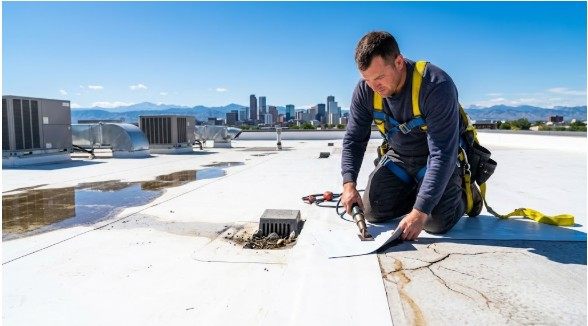
Most flat roof repairs in Denver trace back to one of five recurring problems: ponding water, membrane cracks or blisters, seam failure, flashing deterioration, or punctures from debris and foot traffic. Recognizing which one you are dealing with determines both the fix and the cost.
| Problem | What Causes It | Typical Warning Sign |
| Ponding water | Clogged drains, inadequate slope, debris buildup | Standing water more than 48 hours after rain |
| Blisters or bubbles | Trapped moisture, thermal expansion and contraction | Raised, soft spots in the membrane surface |
| Cracks or splits | UV degradation, thermal shock, aging material | Visible lines or splits in the membrane |
| Seam failure | Adhesive breakdown, welding defects, age | Lifting or separated seam edges |
| Flashing failure | Sealant breakdown around penetrations | Water stains near vents, HVAC curbs, skylights |
| Punctures | Hail, falling debris, foot traffic, dropped tools | Small holes, exposed insulation |
Signs You Need Flat Roof Repair Now
- Water pooling that has not drained within 48 hours of the last rain or snowmelt
- Cracks, bubbles, or blisters visible on the roof surface
- Water stains or discoloration on interior ceilings
- Rising energy bills, which often point to failing insulation under a compromised membrane
- Loose, lifting, or peeling sections of membrane where adhesive or insulation underneath is failing
- Sagging areas, which signal a serious structural concern and need urgent evaluation
If your roof is showing any of these signs, treat it as time-sensitive. Small flat roof issues escalate faster than shingle problems because there is no pitch helping water run off while you wait.
How Much Does Flat Roof Repair Cost in Denver?
Most flat roof repairs in the Denver area fall between $300 and $1,200, with the most common jobs landing around $630 to $925. On a per-square-foot basis, repair work typically runs $2.50 to $10, depending on membrane type, damage severity, and accessibility.
| Repair Type | Typical Cost Range | Notes |
| Minor leak or small patch | $300 to $1,000 | Sealant or patch on a small isolated area |
| Standard leak repair | $500 to $1,200 | Common range for most single-issue calls |
| Medium membrane repair (100 to 300 sq ft) | $1,500 to $4,500 | Larger section repair, flashing replacement around equipment |
| Large section repair (300 to 600 sq ft) | $4,500 to $9,000 | Often includes damaged insulation board replacement |
| Full flat roof replacement | $8 to $12+ per sq ft | Varies significantly by membrane type and complexity |
What Drives the Price on Any Given Job
- Damage size. A pinhole puncture and a 200 square foot membrane section are entirely different jobs.
- Membrane type. TPO repairs require heat-welding equipment and expertise, which sometimes pushes cost slightly above EPDM repairs of similar size.
- Insulation condition. Water-damaged insulation board found underneath a leak adds material and labor cost beyond the surface patch.
- Access. Roofs reached by permanent ladder cost less to service than those requiring lift equipment.
- Emergency versus scheduled timing. After-hours or storm-surge emergency calls typically carry a premium over scheduled repair visits.
Repair or Replace: How to Decide
Repair makes sense when the damage is isolated and the membrane is otherwise sound. Replacement makes sense when the roof is near the end of its expected service life, has recurring leaks in multiple areas, or has widespread insulation saturation. The line between the two comes down to how much of the roof’s remaining life a repair can realistically buy you.
Expected lifespans by common membrane type, based on manufacturer warranty data and field studies:
| Membrane Type | Typical Lifespan | Installed Cost per Sq Ft | Repair Difficulty |
| TPO | 20 to 30 years | $7 to $12 | Moderate, requires heat welding |
| EPDM | 25 to 30 years | $5 to $9 | Easier, adhesive-based seams |
| PVC | 25 to 30 years | $9 to $15 | Moderate, resists ponding well |
| Modified Bitumen | 15 to 25 years | $6 to $11 | Moderate to difficult |
| Built-Up Roofing (BUR) | 20 to 30 years | $5 to $10 | More frequent repairs needed over time |
A roof under 15 years old with an isolated problem is almost always a repair candidate. A roof past 20 years with recurring leaks in different locations each season is usually signaling that the membrane itself is failing, not just one weak point. At that stage, a consultant evaluating your specific roof can tell you honestly whether continued patching still makes financial sense.
The Restoration Middle Ground
Between simple repair and full tear-off sits restoration coating, which is worth asking about for roofs in reasonably maintained condition. A coating applied at the right point in a roof’s life can extend usable service years at a fraction of full replacement cost, though it is only effective on membranes that have been properly maintained rather than badly deteriorated ones.
Residential vs Commercial Flat Roofs in Denver
Flat roofs appear across both commercial and residential Denver properties, but the systems, stakes, and repair approach differ. Commercial buildings dominate flat roof installations, seen constantly across office parks, retail centers, and industrial buildings. Flat roofs have also grown more common in modern residential construction for their contemporary aesthetic.
For commercial buildings, a leak is rarely just a roofing problem. It becomes a tenant relations issue, a potential inventory or equipment loss, and sometimes a documented insurance matter tied to manufacturer warranty compliance. Comprehensive Commercial Roofing service should treat every repair as part of that larger risk picture, not an isolated fix.
For residential flat roof sections, often found over additions, porches, or modern architectural designs, the same physics apply at a smaller scale. Ponding, UV, and freeze-thaw do not care whether the roof sits over a warehouse or a home addition. Residential Roofing that includes flat sections should be inspected on the same schedule as any commercial system.
Insurance and Hail Damage on Flat Roofs
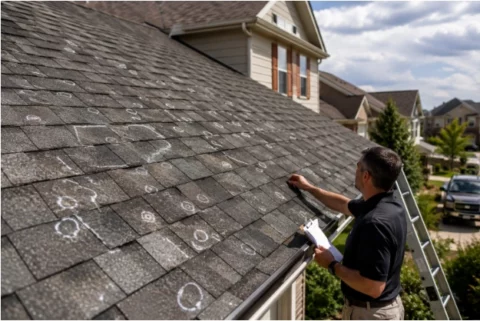
Flat roof membranes are frequently covered under commercial and residential property insurance policies when hail damage is involved, but proving the claim requires documentation most owners do not have on hand. Unlike a shingle roof where hail dents and granule loss are visible from the ground, flat membrane damage is often invisible until a leak develops weeks or months later.
Steps that protect your claim:
- Get an inspection immediately after any hailstorm, even if nothing looks wrong from below.
- Request detailed photo documentation, including membrane condition and any insulation sampling if damage is suspected beneath the surface.
- File promptly. Insurance claim windows are time-limited, and delayed filing is one of the most common reasons legitimate hail claims get denied.
- Keep your maintenance records. Many commercial roofing warranties and some insurance reviews expect to see documented upkeep, and a maintained roof is easier to defend as storm-damaged rather than neglected.
How to Choose a Flat Roof Repair Contractor in Denver
Choose a flat roof repair contractor based on system-specific experience, response time, and documentation quality, not just the lowest quote. Flat roof work rewards specialization in a way sloped shingle work does not, because membrane welding, seam detail, and drainage correction are different skill sets entirely.
Questions worth asking before you hire:
- Which membrane systems do you work on regularly: TPO, EPDM, PVC, modified bitumen, or built-up roofing?
- How quickly can you respond to an active leak or emergency call?
- Will you provide a written, itemized estimate before starting work?
- Do you document repairs with dated photos I can keep for insurance or warranty purposes?
- Is my roof a repair candidate or should I be planning for replacement in the near term?
- Are you licensed and insured, and can you provide proof directly from the carrier?
Colorado does not require a statewide roofing contractor license, so verifying liability insurance, workers’ compensation coverage, and a genuine local presence carries extra weight here. A permanent Denver address matters, because a contractor who patched your roof this spring needs to still be reachable if that same section needs attention again. Reviewing a contractor’s Projects is a useful way to confirm real local experience with low-slope systems specifically, not just shingle work.
Preventing the Next Repair
The single most effective way to reduce flat roof repair frequency is routine inspection paired with proactive drainage maintenance. Clearing drains and scuppers before they clog, addressing small membrane issues while they are still small, and scheduling a post-storm check after every significant hail event catches problems while they are still inexpensive to fix.
A roof that receives consistent attention rarely needs emergency repair. A roof that only gets attention after a leak appears indoors is almost always facing a bigger, more expensive job than it needed to be.
Why Denver Property Owners Choose 303 Roofer
303 Roofer is a Denver-based roofing company and licensed General Contractor serving Denver and the Front Range, holding an A rating with the Denver Better Business Bureau and a 4.9-star Google rating across 48 customer reviews. The team has been recognized as one of Forbes’ Best Roofing Contractors in Denver.
Operating from a permanent office at 2246 Irving St, 303 Roofer brings in-house capability across both residential and commercial roofing, including flat and low-slope systems, so a repair recommendation reflects what the roof actually needs rather than a one-size-fits-all fix. Every visit starts with an inspection and a written, itemized estimate before any work begins.
FAQs About Flat Roof Repair Denver CO
Q1. How much does flat roof repair cost in Denver, CO?
Ans: Most flat roof repairs in Denver cost between $300 and $1,200, with the typical job landing around $630 to $925. Small isolated leak repairs sit at the lower end, while medium membrane sections running 100 to 300 square feet can run $1,500 to $4,500. Per square foot, expect roughly $2.50 to $10 depending on membrane type and damage severity.
Q2. What is the most common cause of flat roof leaks in Denver?
Ans: Ponding water is the leading cause of flat roof failure, typically from clogged drains, debris buildup, or inadequate slope. If water sits on the roof for more than 48 hours after rain or snowmelt, it accelerates membrane breakdown and leads directly to leaks. Denver’s freeze-thaw cycling and intense UV exposure compound the problem by stressing seams and degrading membrane material even where ponding is not present.
Q3. Should I repair or replace my flat roof?
Ans: Repair is usually the right call for isolated damage on a roof under 15 years old with an otherwise sound membrane. Replacement becomes the better option when leaks recur in multiple locations, the membrane is past 20 years old, or insulation has widespread water saturation. An honest inspection should tell you which situation you are in rather than defaulting to the more expensive option.
Q4. How long does a flat roof last in Denver?
Ans: Expected lifespan depends on the membrane. TPO and built-up roofing typically last 20 to 30 years, EPDM and PVC run 25 to 30 years, and modified bitumen tends to need replacement sooner, around 15 to 25 years. Denver’s climate stresses on flat roofs mean reaching the upper end of any of these ranges depends heavily on consistent maintenance and prompt repair of minor issues.
Q5. Does homeowners or commercial insurance cover flat roof hail damage?
Ans: Often yes, since flat roof membranes on both commercial and residential properties are commonly covered under property insurance policies for hail damage. The challenge is that membrane hail damage is frequently invisible from the ground and does not leak immediately, so getting an inspection right after a hailstorm with documented photos is essential to supporting a claim before the filing window closes.
Q6. Does 303 Roofer repair flat roofs in Denver?
Ans: Yes. 303 Roofer provides flat and low-slope roof repair, inspection, and replacement across Denver and the surrounding metro area for both residential and commercial properties. The company is based at 2246 Irving St in Denver, holds an A rating with the Denver Better Business Bureau and a 4.9-star Google rating from 48 reviews, and has been recognized as one of Forbes’ Best Roofing Contractors in Denver. Reach the team at (303) 390-1382 Monday through Friday, 8:00 am to 5:00 pm.
Final Thoughts
Flat roof repair in Denver is rarely just about the immediate leak. The same ponding water, UV exposure, and freeze-thaw cycling that caused today’s problem is still working on the rest of the membrane, which is why an isolated patch job should always come with an honest read on the roof’s overall condition.
Catching problems early keeps repairs in the few-hundred-dollar range instead of the few-thousand-dollar range, and it protects both your insurance position and your manufacturer warranty if the roof is ever damaged by hail. If your flat roof shows any signs of ponding, cracking, or interior water stains, schedule an inspection now rather than waiting for the next storm to make the decision for you.
303 Roofer provides flat roof repair, inspection, and replacement for residential and commercial properties across Denver and the Front Range. To schedule a free inspection or request a written repair estimate, contact the team today.
303 Roofer 2246 Irving St, Denver, CO 80211 Phone: (303) 390-1382 Email: info@303roofer.com Hours: Monday to Friday, 8:00 am to 5:00 pm Serving Denver and the Front Range

Related Blog Articles