Roofing Contractor Lakewood CO: The Complete 2026 Homeowner’s Guide to Hiring Right
Hiring the right roofing contractor Lakewood CO homeowners can actually trust comes down to four things: verifiable local licensing, manufacturer certifications, documented hail and insurance experience, and a written scope of work you can read line by line. Lakewood sits directly in the Front Range hail corridor, so roofs here fail faster than the national average and storm-chasing companies flood the market every spring. This guide walks you through the entire hiring process, the real cost ranges, the material choices that make sense at 5,500 feet, and the questions that separate a legitimate local roofer from a temporary out-of-state crew.
Why Lakewood Roofs Wear Out Faster Than the National Average
Lakewood roofs age faster because of a specific combination of hail frequency, high-altitude UV exposure, and dramatic freeze-thaw cycling. A shingle rated for 30 years in a mild climate frequently delivers 15 to 20 years here, and after a single significant hail event it may need full replacement regardless of age.
Three environmental forces do most of the damage:
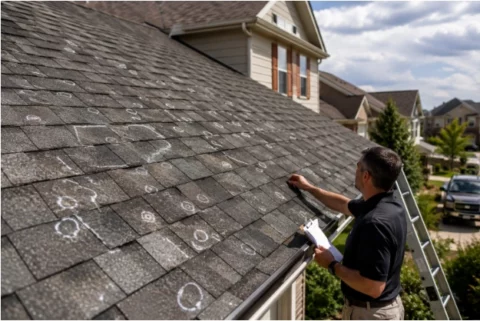
- Hail impact. The Front Range experiences one of the highest hail loss rates in the country, with the active season running roughly April through September. Hail bruises the asphalt mat beneath the granules, and that bruising is often invisible from the ground.
- UV degradation at altitude. Lakewood sits above 5,500 feet, where ultraviolet intensity is substantially stronger than at sea level. UV dries the asphalt binder, causes granule loss, and makes shingles brittle years ahead of schedule.
- Freeze-thaw cycling. Denver metro winters swing above and below freezing repeatedly within the same week. Water enters small cracks, freezes, expands, and widens them. Over a decade this quietly destroys flashing seals and shingle edges.
Add an aging housing stock, much of it built during the 1960s through 1980s expansion, and you get a city where a large share of homes are on their second or third roof. That is exactly why the local roofing market is so crowded, and why knowing how to evaluate a contractor matters more here than almost anywhere else.
What This Means for Your Roof Timeline
Plan on inspecting your Lakewood roof annually and after every notable storm. Most homeowners here should expect a replacement conversation somewhere between years 15 and 22 for standard architectural shingles, and later than that only if the roof has escaped direct hail.
How to Choose a Roofing Contractor in Lakewood, CO
Choose a roofing contractor in Lakewood by verifying local presence, insurance, certifications, and warranty terms before you ever discuss price. Price is the last filter, not the first. A cheap roof installed incorrectly costs far more than a fair-priced roof installed right, because failed installations are rarely covered by manufacturer warranties.
Work through these checks in order:
- Confirm a physical local address. A real Lakewood or Denver metro office means the company will still be reachable in five years when you have a warranty claim. Storm chasers use PO boxes, rented suites, and out-of-state phone numbers.
- Verify liability insurance and workers’ compensation. Ask for a certificate of insurance sent directly from the insurer, not a PDF forwarded by the salesperson. If an uninsured worker is hurt on your property, liability can land on you.
- Understand what licensing actually means in Colorado. Colorado does not require a specific statewide roofing contractor license, which is exactly why the market attracts so many short-lived operators. What a legitimate company does hold is a valid business license, a General Contractor license where applicable, and city permits pulled for each job. Roofing work in Lakewood requires a permit through the city, and a contractor who suggests skipping it is telling you something important about how they operate. Confirm current permit requirements through the City of Lakewood official website.
- Ask about manufacturer certifications. Because there is no state license gate, certifications become the most reliable quality signal available. GAF Master Elite, Owens Corning Preferred, CertainTeed ShingleMaster, and Malarkey Emerald Premium require ongoing training and workmanship standards, and only a small share of roofers nationwide hold top-tier status. They also unlock enhanced warranties non-certified installers simply cannot offer. GAF’s Golden Pledge, for example, covers both materials and workmanship for up to 25 years, while the same shingles installed by a non-certified contractor carry only a basic limited warranty.
- Read the written scope of work. It should list shingle brand and line, underlayment type, ice and water shield placement, ventilation plan, flashing replacement, nail count per shingle, and cleanup terms.
- Review recent local projects. Ask for addresses in your neighborhood from the past 12 months. Reviewing a contractor’s completed Projects gives you a far better read on craftsmanship than a stock photo gallery ever will.
Red Flags That Should End the Conversation
Certain behaviors reliably predict a bad outcome. Walk away if you encounter any of the following:
- Door-to-door pressure immediately after a storm with a “today only” discount
- An offer to waive, absorb, or “eat” your insurance deductible, which is illegal in Colorado
- Requests for large cash deposits before materials are ordered or delivered
- No written contract, or a contract with blank scope and material fields
- Refusal to provide insurance certificates or license information on request
- A phone number with an out-of-state area code and no local office
What Does a Roof Replacement Cost in Lakewood?
Most full roof replacements in Lakewood fall between roughly $12,000 and $28,000, with the majority of standard single-family homes landing in the middle of that band. The spread is wide because square footage, roof pitch, material grade, layer removal, and decking condition all move the number significantly.
| Roofing Material | Typical Installed Cost (Average Lakewood Home) | Expected Lifespan on the Front Range | Hail Performance | Best Fit For |
| 3-Tab Asphalt Shingle | $9,000 to $14,000 | 12 to 16 years | Poor | Rental property, short-term ownership |
| Architectural Asphalt Shingle | $13,000 to $20,000 | 18 to 25 years | Moderate | Most Lakewood homeowners |
| Class 4 Impact-Resistant Shingle | $18,000 to $28,000 | 25 to 30 years | Excellent | Hail-exposed neighborhoods, long-term owners |
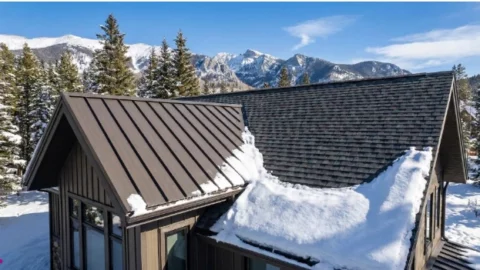
| Standing Seam Metal | $28,000 to $50,000 | 40 to 60 years | Excellent | Foothills-adjacent homes, modern designs |
| Concrete or Clay Tile | $30,000 to $55,000 | 40 to 60 years | Good | Homes structurally rated for tile weight |
| TPO or EPDM (Flat Sections) | $8 to $14 per square foot | 20 to 30 years | Good | Flat roof areas, additions, commercial |
Costs listed above reflect typical Denver metro pricing ranges and vary with material availability, roof complexity, and the extent of decking repair discovered after tear-off.
How Roofers Actually Calculate Your Quote
Roofing is priced by the square, which equals 100 square feet of roof surface. Your roof’s square count is always larger than your home’s floor square footage because it accounts for pitch and overhangs. Most Colorado homes fall between 20 and 35 squares.
Current Lakewood market rates by the square:
| Line Item | 2026 Installed Rate | Notes |
| Standard architectural shingles | $450 to $750 per square | GAF Timberline, CertainTeed Landmark tier |
| Class 4 impact-resistant shingles | $550 to $750 per square | Recommended for most Lakewood roofs |
| New OSB decking replacement | Around $150 per square | Only charged where rot is found |
| Ice and water shield | $20 to $30 per square if upsold | Some contractors include it standard |
| Commercial TPO, 60 mil | $5.61 to $8.67 per square foot | EPDM lower, PVC and metal higher |
For a 2,000 to 2,500 square foot Lakewood home with a moderately complex roof, the realistic landing zone is $15,000 to $22,000 for quality materials and professional installation. Small single-story ranches with simple roof lines can come in under $12,000. Large homes with steep pitches, multiple dormers, and premium materials regularly exceed $30,000.
One item worth asking about specifically: ventilation. Industry estimates suggest the large majority of Colorado homes are under-ventilated or improperly ventilated, and correcting that during a replacement is often necessary to keep the manufacturer warranty valid.
The Class 4 Shingle Question
Class 4 impact-resistant shingles usually pay for themselves in Lakewood through insurance premium discounts and avoided replacements. Many Colorado carriers offer meaningful annual discounts for Class 4 roofs, and over a 25-year ownership window that discount plus one avoided hail replacement often exceeds the upfront premium. Ask your insurer for their specific discount before committing, since the figure varies by carrier.
What Actually Drives Your Final Number
- Roof pitch and complexity. Steep roofs require safety staging and slow production. Multiple valleys, dormers, and chimneys add labor and flashing cost.
- Decking condition. Rotten or delaminated sheathing discovered at tear-off is billed per sheet. A good estimate discloses this per-sheet rate in advance.
- Number of existing layers. Removing two layers roughly doubles tear-off labor and disposal weight.
- Ventilation upgrades. Adding intake or exhaust ventilation to meet code and warranty requirements adds cost but extends roof life meaningfully.
- Accessory items. Pipe boots, drip edge, ice and water shield coverage, ridge caps, and gutter apron are real line items, not filler.
Residential Roofing in Lakewood Neighborhoods
Residential roofs across Lakewood face different pressures depending on where the home sits. Foothills-adjacent areas take more wind, while central and eastern Lakewood tracks with typical metro hail patterns.
Lakewood is the fifth-largest city in Colorado, home to roughly 160,000 residents across a footprint that stretches from the foothills west of Denver down to Bear Creek and Green Mountain. That geographic spread is why a single storm rarely affects the whole city equally.
Homes near Green Mountain and Solterra sit closer to the foothills and see stronger downslope wind events, which lift shingle tabs and stress ridge lines. Older neighborhoods around Belmar, Morse Park, and Eiber often carry decades-old decking and original ventilation that no longer meets current code. Applewood and the northern edge of the city sit in a corridor where narrow hail cells can hit one block and skip the next entirely.
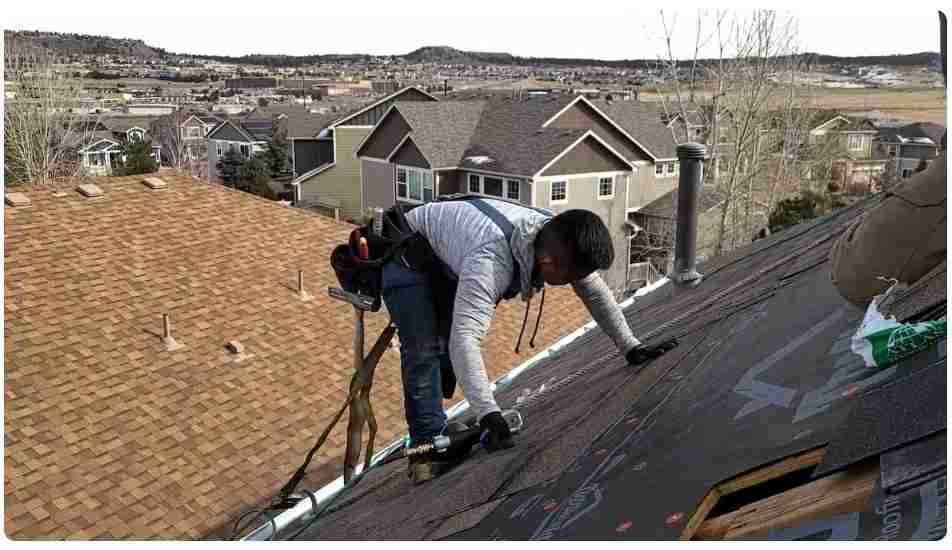
That last point matters more than most homeowners realize. Hail cells cut narrow paths. If your neighbor two streets over is getting a new roof and you assume you were spared, schedule an inspection anyway. Insurance claim windows are limited, and a missed claim becomes an out-of-pocket replacement two years later. Comprehensive Residential Roofing service should always begin with a documented inspection rather than a sales pitch.
Signs Your Lakewood Home Needs a Roof Inspection
- Granules collecting in gutters or at downspout outlets
- Shingles that look bruised, dented, or have shiny black spots where granules were knocked away
- Lifted, cracked, or curling shingle edges visible from the ground
- Water staining on ceilings, in the attic, or around chimney and skylight penetrations
- Damaged or dented metal on gutters, vents, or the AC condenser unit, which often signals hail hit the roof too
- Daylight visible through attic decking boards
Commercial Roofing Considerations in Lakewood
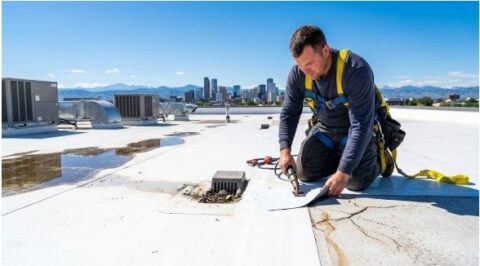
Commercial roofing in Lakewood centers on flat and low-slope systems, where membrane selection and drainage design determine long-term performance. The failure modes differ entirely from residential shingle roofs.
Lakewood’s commercial corridors along Colfax, Alameda, Union, and Wadsworth include retail centers, warehouses, office buildings, and multi-unit residential properties. Most run TPO, EPDM, PVC, or modified bitumen systems. TPO dominates new installations because of its heat-reflective white surface and welded seams, which perform well against Colorado’s UV load. EPDM remains common on older buildings and handles temperature swings reliably.
For property managers, the deciding factors are usually different from those a homeowner weighs:
- Occupancy disruption. Phased installation and off-hours work protect tenant operations.
- Drainage and ponding. Standing water over 48 hours voids many membrane warranties and accelerates seam failure.
- Rooftop equipment. HVAC units, curbs, and penetrations are the most common leak sources on flat roofs and need proper flashing detail.
- Maintenance programs. Scheduled semi-annual inspections extend membrane life by years and preserve warranty coverage.
Buildings with mixed roof geometry often need both membrane and steep-slope expertise on the same project, which is why choosing a Commercial Roofing partner with in-house capability across both systems avoids the coordination gaps that create leaks at transitions.
How the Insurance Claim Process Works in Lakewood
A Colorado hail claim follows a predictable sequence, and understanding it prevents the mistakes that cost homeowners money. The most common error is signing a contract before the adjuster has inspected the property.
Here is the standard sequence:
- Document the storm date. Note the date and keep any local news or weather record confirming hail in your area.
- Get an independent inspection. A qualified roofer documents damage with photos and a written report before you file.
- File the claim with your carrier. Provide the storm date and the inspection documentation.
- Attend the adjuster meeting. Your contractor should be present to walk the roof with the adjuster and point out damage the adjuster may not flag.
- Review the scope and settlement. Compare the carrier’s line-item scope against the contractor’s assessment. Missing items can be supplemented.
- Approve materials and schedule. Choose your shingle line and color, then lock in the install date.
- Complete work and submit final documentation. The carrier releases recoverable depreciation after proof of completion.
Two things to keep in mind. First, deductible waiving is illegal in Colorado and any contractor offering it is exposing you to fraud liability. Second, filing a claim does not obligate you to use the contractor who inspected the roof, so never sign an open-ended authorization form at the door.
Questions to Ask Before You Sign Anything
Ask these directly, and write the answers down:
- How long have you operated from a physical address in the Denver metro area?
- Which manufacturer certifications do you hold, and what warranty do they unlock on my specific shingle line?
- Who pulls the permit, and is the permit cost included in this estimate?
- What is your per-sheet rate for replacing damaged decking?
- Is ice and water shield included, and at which locations?
- What is your workmanship warranty length, and is it transferable if I sell the home?
- Are your crews employees or subcontractors, and are they covered by your workers’ compensation policy?
- What is your payment schedule, and what is due before work begins?
Two benchmarks to measure the answers against. First, get at least three on-site estimates so you can compare scope, not just price. Second, the strongest roofers back their work with a manufacturer warranty of 30 years or more on materials plus a labor guarantee of at least five years. Noticeably shorter warranty terms are worth questioning.
A contractor who answers these clearly and without hesitation is worth serious consideration. One who deflects is telling you what the project will feel like. When you are ready to compare answers side by side, request a written estimate through the Contact page and put every promise in the document.
Why Lakewood Homeowners Work With 303 Roofer
303 Roofer is a Denver-based roofing company and licensed General Contractor serving Lakewood and the wider Denver Metro and Front Range area, with an A rating from the Denver Better Business Bureau and a 4.9-star Google rating across 48 customer reviews.
The team was recognized as one of Forbes’ Best Roofing Contractors in Denver, and the company operates from a permanent local office at 2246 Irving St in Denver rather than a temporary storm-season address. That distinction matters in Lakewood, where a large share of the companies knocking on doors each spring will not be reachable when a warranty question comes up three years later.
What Lakewood homeowners and property managers consistently point to:
- Lifelong Denver residents on the crew. The team has worked through Front Range hail seasons, downslope wind events, and freeze-thaw winters for years, so recommendations are based on what actually holds up here rather than what sells nationally.
- Licensed General Contractor status. Storm damage rarely stops at the roof. Working with a licensed GC means siding, gutters, and related exterior repairs can be handled under one accountable scope instead of being split across three subcontractors.
- Residential and commercial capability in-house. The same team handles steep-slope shingle work and low-slope membrane systems, which prevents the transition-point leaks common when two separate crews split a mixed-geometry roof.
- Real estate agent and property manager relationships. Repeat work for agents handling client closings speaks to turnaround reliability and clean documentation, both of which matter when a roof condition is holding up a sale.
- A rating with the Denver BBB. Third-party accountability, not self-reported claims.
Every project starts with an inspection and a written, itemized scope so you can see exactly what is included before anything is signed. You can reach the office Monday through Friday, 8:00 am to 5:00 pm, at (303) 390-1382 or by email at info@303roofer.com.
FAQs About Roofing Contractor Lakewood CO
Q1. How much does it cost to hire a roofing contractor in Lakewood, CO?
Ans: Most full residential roof replacements in Lakewood run between $12,000 and $28,000, with typical architectural shingle projects landing near the $13,000 to $20,000 range. Class 4 impact-resistant shingles push toward the upper end but often qualify for insurance premium discounts. Repairs are far cheaper, commonly a few hundred to a few thousand dollars depending on scope. Always get an itemized written estimate rather than a single lump-sum figure.
Q2. Do I need a permit to replace my roof in Lakewood?
Ans: Yes. Roof replacement in Lakewood requires a permit pulled through the city, and inspections are part of the process. A legitimate contractor handles the permit for you and includes the cost in the estimate. If a contractor suggests skipping the permit to save money, treat it as a disqualifying red flag, because unpermitted work can create problems at resale and may void insurance coverage.
Q3. How long does a roof replacement take in Lakewood?
Ans: Most single-family roof replacements are completed in one to three days once materials are on site. Larger homes, steep or complex roofs, tile installations, and unexpected decking repairs extend the timeline. Weather is the biggest variable on the Front Range, since crews cannot safely install during rain, high wind, or lightning. Your contractor should give you a scheduled window and communicate any weather delays the same day.
Q4. Should I choose Class 4 impact-resistant shingles in Lakewood?
Ans: For most Lakewood homeowners planning to stay long term, yes. Class 4 shingles are tested to resist impact far better than standard architectural shingles, which matters directly in a city with this much hail exposure. Many Colorado insurers offer annual premium discounts for Class 4 roofs, and avoiding even one hail-driven replacement typically offsets the higher upfront cost over a 25-year ownership window.
Q5. Do roofing contractors need a license in Colorado?
Ans: Colorado does not require a specific statewide roofing contractor license, though every roofing business must hold a valid business license and pull permits through the city where the work happens. That low barrier to entry is why manufacturer certifications, insurance verification, and local track record matter so much here. Always confirm liability coverage, workers’ compensation, and city permitting before signing, since none of those are guaranteed by the absence of a state license requirement.
Q6. How do I know if a Lakewood roofing company is legitimate or a storm chaser?
Ans: Check for a physical local address, a local phone number, current liability and workers’ compensation insurance, manufacturer certifications, and a track record of completed local projects with verifiable addresses. Storm chasers typically appear door to door immediately after hail events, pressure you to sign the same day, offer to cover your deductible, and cannot show consistent local work history. Legitimate contractors are still reachable years later when a warranty claim comes up.
Q7. Does 303 Roofer serve Lakewood, CO?
Ans: Yes. 303 Roofer is based in Denver at 2246 Irving St and serves Lakewood along with the broader Denver Metro and Front Range area, covering both residential and commercial roofing. The company is a licensed General Contractor holding an A rating with the Denver Better Business Bureau, a 4.9-star Google rating from 48 reviews, and recognition as one of Forbes’ Best Roofing Contractors in Denver. You can reach the team at (303) 390-1382 Monday through Friday, 8:00 am to 5:00 pm.
Final Thoughts
Choosing a roofing contractor in Lakewood, CO is less about finding the lowest bid and more about finding a company that will still be standing behind the work a decade from now. The combination of hail frequency, high-altitude UV, and freeze-thaw cycling means your roof will be tested harder here than in most of the country, and installation quality is what determines whether it holds up.
Slow the process down. Verify insurance and licensing, ask for manufacturer certifications, read the scope of work line by line, and never sign under pressure at your front door. The homeowners who take an extra week to compare properly almost always end up with a better roof at a fair price, and they avoid the warranty disputes that follow rushed decisions.
If your roof is past 15 years old, or if hail has moved through your neighborhood recently, schedule an inspection now rather than waiting for the leak that forces the decision for you.
303 Roofer serves Lakewood and the surrounding Denver Metro area with residential and commercial roofing, inspections, and storm restoration. To schedule a free inspection or request a written itemized estimate, contact the team today.
303 Roofer 2246 Irving St, Denver, CO 80211 Phone: (303) 390-1382 Email: info@303roofer.com Hours: Monday to Friday, 8:00 am to 5:00 pm Serving Lakewood, Denver Metro, and the Front Range

Related Blog Articles