Impact Resistant Shingles Colorado Discount: How to Save on Home Insurance
If you own a home along Colorado’s Front Range, you already know how damaging hailstorms can be. Repeated storms can crack shingles, loosen protective granules and shorten the life of an otherwise healthy roof. Choosing impact-resistant roofing may help reduce that risk-and it may also make you eligible for an insurance premium credit.
Understanding the impact resistant shingles Colorado discount is important before investing in a new roof. Some insurance companies offer reduced premiums for qualifying impact-resistant roofing, but the amount varies by provider, policy and property. The impact resistant shingles Colorado discount is not a guaranteed statewide percentage, so homeowners should confirm the available savings directly with their insurance company. Knowing how the impact resistant shingles Colorado discount works can help you compare roofing options and estimate the long-term value of an upgrade.
At 303 Roofers, we help homeowners across the Denver metro area understand their roofing options, including Class 4 impact-resistant shingles. Here is what you should know before choosing a new roof.
What Are Impact-Resistant Shingles?
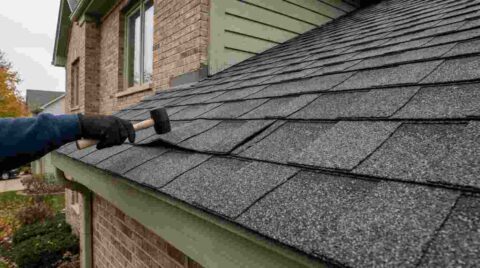
Impact-resistant shingles are roofing materials designed and tested to withstand a greater level of impact than conventional asphalt shingles. They are particularly relevant in areas like Colorado, where hail can cause significant damage to residential roofs.
Many impact-resistant asphalt shingles are tested under UL 2218, a recognised standard that evaluates the impact resistance of prepared steep-slope roofing materials.
The standard uses steel balls dropped onto roofing samples from specified heights. Products are assigned one of four impact-resistance classes, with Class 4 representing the highest rating.
Understanding UL 2218 impact-resistance classes
| UL 2218 class | Steel ball diameter | Drop height |
| Class 1 | 1.25 inches | 12 feet |
| Class 2 | 1.50 inches | 15 feet |
| Class 3 | 1.75 inches | 17 feet |
| Class 4 | 2.00 inches | 20 feet |
A Class 4 rating indicates that the tested roofing material passed the applicable laboratory impact test. It does not mean the roof is hail-proof or guaranteed to withstand every storm.
The test is a standardised way to compare roofing products. Real-world performance can also depend on installation quality, roof age, weather conditions and the size and direction of hail impacts. UL’s standard explains these testing limitations.
Why Class 4 shingles are worth considering
Class 4 shingles are designed to offer enhanced impact resistance. Depending on the product, their construction may use modified asphalt or other material technologies to improve flexibility and resistance to cracking.
Potential benefits include:
- Better resistance to certain hail impacts compared with lower-rated products.
- Reduced risk of some types of impact-related shingle damage.
- Potential eligibility for an insurance premium credit.
- More roofing options for homeowners in hail-prone areas.
- An opportunity to consider long-term roof performance when replacing an existing roof.
The exact benefits depend on the selected product and the conditions affecting your property.
How Does the Colorado Insurance Discount Work?
Some homeowners insurance companies offer premium credits for qualifying impact-resistant roofing. These credits are intended to recognise the potential reduction in hail-related risk associated with certain roofing materials.
However, there is an important distinction: Colorado does not set one universal Class 4 roof discount that every insurance company must provide.
Insurance companies determine their own eligibility requirements and available credits. The amount may depend on:
- The insurance company and policy.
- The impact-resistance class of the roofing material.
- The approved product list, if the insurer uses one.
- The location and characteristics of the property.
- Whether the insurer requires a specific installation or certification document.
- The portion of the premium eligible for the credit.
Some insurers advertise roofing discounts in Colorado, but homeowners should not assume that every Class 4 product qualifies for the same savings.
What about Colorado’s newer roof-resilience legislation?
Colorado’s SB26-155, signed in 2026, established the Strengthen Colorado Homes Enterprise to support efforts to improve residential resilience against hailstorms. The legislation also provides for future insurance reporting on resilient roofing systems and related discounts.
This is not the same as a law guaranteeing every homeowner a particular premium reduction for installing Class 4 shingles. The programme’s requirements and qualifying roof systems should be checked before homeowners make financial decisions based on possible incentives.
For the latest legislative details, consult the Colorado General Assembly’s SB26-155 information.
How Much Could You Save on Homeowners Insurance?
The potential savings from impact-resistant roofing depend on the credit your insurer offers and the part of your premium to which it applies.
For example, imagine that the wind and hail portion of your annual insurance premium is $2,000. The following table illustrates how different hypothetical credits would affect that amount.
| Illustrative credit | Annual wind and hail premium | Annual savings | Remaining amount |
| 5% | $2,000 | $100 | $1,900 |
| 10% | $2,000 | $200 | $1,800 |
| 15% | $2,000 | $300 | $1,700 |
| 20% | $2,000 | $400 | $1,600 |
| 25% | $2,000 | $500 | $1,500 |
These are examples for comparison, not guaranteed Colorado insurance rates or promised discounts. Your actual savings could be different, and some insurers may calculate credits using a different premium basis.
Calculate your potential savings
Before choosing a roofing upgrade, ask your insurer for two figures:
- Your current annual premium.
- The estimated premium after installing an approved impact-resistant roof.
The difference between those figures gives you a more useful estimate than relying on a general percentage advertised online.
You should also ask whether the credit applies immediately or at renewal, whether it can change over time, and whether any other policy conditions affect eligibility.
Impact-Resistant Shingles vs. Standard Architectural Shingles
Standard architectural shingles remain a common roofing choice. They are available in many colours and styles, but their impact resistance can differ from that of products specifically tested and rated for higher impact resistance.
Class 4 shingles are designed to perform better under the UL 2218 impact test. Whether the upgrade makes financial sense depends on the roof’s condition, installation cost, insurance credit and your long-term plans.
| Feature | Standard architectural shingles | Class 4 impact-resistant shingles |
| Impact rating | Depends on the product | UL 2218 Class 4 |
| Laboratory impact resistance | Varies by product | Highest UL 2218 class |
| Hail protection | Varies by material | Designed for enhanced impact resistance |
| Insurance credit | Depends on insurer | May qualify, subject to insurer requirements |
| Initial cost | Often lower | May cost more |
| Appearance | Many styles and colours | Many styles and colours available |
| Maintenance | Depends on exposure and condition | Still requires regular inspection and maintenance |
One important consideration: a Class 4 rating does not automatically mean a roof will last longer than every standard shingle roof. Actual lifespan depends on the product warranty, installation, ventilation, maintenance and exposure to weather.
What Class 4 Shingle Brands Should You Consider?
Several roofing manufacturers offer products designed to meet higher impact-resistance standards. Product availability, specifications and insurance eligibility should always be confirmed before installation.
Some product lines homeowners may encounter include:
- GAF Timberline HDZ: A popular architectural shingle line. Confirm the exact product and configuration before assuming it has a Class 4 rating.
- Owens Corning Duration FLEX: An impact-resistant shingle option featuring a flexible modified-asphalt formulation.
- CertainTeed Landmark IR: An impact-resistant option in the Landmark product family.
- Atlas StormMaster products: Certain products in this range are designed for impact resistance.
- TAMKO Heritage IR: An impact-resistant option in the Heritage range.
Do not select a shingle based only on its brand name. Ask for the exact product name, technical documentation and UL 2218 rating. Also check whether your insurer recognises that specific product.
Does Installing Class 4 Shingles Make Your Roof Hail-Proof?
No. This is one of the most important things homeowners should understand.
Class 4 is the highest rating under UL 2218, but the test does not reproduce every condition of a natural hailstorm. Hailstones vary in size, shape, density, speed and direction. A storm may also affect different sections of a roof unevenly.
Even a Class 4 roof can experience:
- Granule loss.
- Surface bruising or cosmetic damage.
- Damage from exceptionally large hail.
- Damage to flashing, vents or other roof components.
- Problems caused by poor installation or existing roof deterioration.
Impact-resistant shingles are intended to reduce certain types of impact damage, not eliminate every roofing risk.
Regular inspections remain important, particularly after a significant hailstorm.
How to Claim an Impact-Resistant Roofing Insurance Credit
If your insurance company offers a credit for qualifying roofing materials, follow its requirements carefully.
Step 1: Contact your insurance company before installation
Ask whether the company offers an impact-resistant roofing credit in Colorado. Find out which UL 2218 classes and products qualify.
Do this before purchasing materials. A product that has a Class 4 rating may still need to meet additional insurer-specific requirements.
Step 2: Confirm the approved roofing product
Ask your insurance agent whether the exact manufacturer and product name are accepted.
If the insurer provides an approved product list or certification form, obtain it before finalising your roofing choice.
Step 3: Choose a qualified roofing contractor
Work with a contractor who understands the product specifications and installation requirements.
The installation should follow the manufacturer’s instructions and applicable local building requirements. A high-rated shingle cannot deliver its intended performance if it is installed incorrectly.
Step 4: Collect the installation documents
Keep copies of the documents your insurer requests. These may include:
- Manufacturer and product name.
- Product technical specifications.
- UL 2218 impact-resistance documentation.
- Contractor invoice.
- Installation or completion certificate.
- Photographs of the completed roof, if required.
- The insurer’s completed certification form.
Step 5: Submit the documents and check your policy
Send the requested information to your insurance agent or insurer. Ask when the credit will take effect and request confirmation in writing.
Review your next policy statement or renewal documents to make sure the adjustment has been applied correctly.
When Is the Best Time to Upgrade to Impact-Resistant Shingles?
For many homeowners, the most practical time to consider Class 4 shingles is when an existing roof already needs replacement.
If your roof has reached the end of its useful life, replacing it with an impact-resistant product may be a sensible opportunity to improve its performance.
You may also consider the upgrade after storm damage, but the insurance claim process and any additional upgrade costs should be discussed with your insurer before work begins.
Consider these situations
Your roof is nearing the end of its service life.
If shingles are deteriorating, damaged or approaching the end of their expected lifespan, compare standard and impact-resistant replacement options.
Your area experiences frequent hailstorms.
Homes exposed to recurring hail may benefit from roofing materials designed for greater impact resistance.
Your insurance company offers a qualifying credit.
If your insurer confirms an available credit, include the potential savings in your cost comparison.
You are planning a long-term home improvement.
If you expect to remain in your property for several years, consider both the initial installation cost and the potential long-term benefits.
Spring, summer and fall are common roofing installation seasons in Colorado. However, installation timing depends on weather, temperature, contractor availability and manufacturer requirements.
Common Mistakes to Avoid When Choosing Impact-Resistant Shingles
An impact-resistant roof is a significant investment. Avoid these mistakes when comparing products and contractors.
Assuming every Class 4 shingle earns an insurance credit
A Class 4 rating does not automatically guarantee eligibility. Always check your insurer’s requirements and approved product list.
Believing the roof is completely hail-proof
No roofing product can guarantee protection from every hailstorm. Understand what the rating measures and what it does not.
Choosing a product based only on price
Compare the product’s rating, warranty, installation requirements and suitability for your property. A lower initial quote may not represent the best overall value.
Ignoring installation quality
The roofing system includes more than shingles. Underlayment, flashing, ventilation, roof decking and correct installation all matter.
Assuming the advertised savings will apply to your entire premium
Insurance credits may apply only to a particular part of your policy. Request a written estimate from your insurer before calculating your return on investment.
Frequently Asked Questions
Q1. Do all Colorado insurance companies offer a Class 4 shingle discount?
Ans: No. Some insurance companies offer premium credits for qualifying impact-resistant roofing, but availability and eligibility requirements vary. Contact your insurer to confirm its current programme.
Q2. How much is the impact-resistant shingles Colorado discount?
Ans: There is no single statewide discount percentage. The credit depends on the insurance company, policy, qualifying roofing product and property details. Ask your agent for an individual estimate.
Q3. Does Colorado law require insurance companies to offer a Class 4 roof discount?
Ans: Do not assume that it does. Colorado’s SB26-155 establishes a roof-resilience enterprise and provides for future insurer reporting on resilient roofing systems and discounts. It does not establish a universal Class 4 discount percentage for every homeowner.
Q4. Is Class 4 the highest impact-resistance rating?
Ans: Yes. Class 4 is the highest rating under the UL 2218 impact-resistance classification system.
Q5. Can Class 4 shingles still be damaged by hail?
Ans: Yes. Class 4 shingles can still experience damage during severe hailstorms. The rating reflects performance under a standardised laboratory test, not a guarantee against all real-world weather conditions.
Q6. Do impact-resistant shingles look different from standard shingles?
Ans: Not necessarily. Many impact-resistant products are available in familiar architectural styles and colour options. Ask your contractor to show you samples and confirm the exact product specifications.
Q7. What documents do I need to claim an insurance credit?
Ans: Your insurer may request the product name, impact rating, manufacturer documentation, installation invoice, completion certificate or a specific certification form. Confirm the requirements before installation.
Q8. Are impact-resistant shingles worth the extra cost in Colorado?
Ans: They may be worth considering if your home is exposed to hail, your existing roof needs replacement and your insurer offers a qualifying credit. Compare the actual installation cost and confirmed insurance savings before making a decision.
Contact 303 Roofers for Impact-Resistant Roofing
Choosing the right roofing material is about more than selecting a shingle colour. You need to consider impact resistance, installation quality, product specifications, warranty coverage and the insurance requirements that apply to your home.
Class 4 impact-resistant shingles may be a valuable option for homeowners across Denver and the surrounding Colorado communities. However, the best choice depends on your roof, budget and insurance policy.
The team at 303 Roofers can help you explore roofing options and understand what to consider when planning an impact-resistant roof installation.
If you are thinking about upgrading your roof, contact 303 Roofers to discuss your project and request an estimate. You can also follow us on Facebook for roofing updates, storm-season information and project highlights.
Make an informed roofing decision today – and choose protection that suits your home.

Related Blog Articles